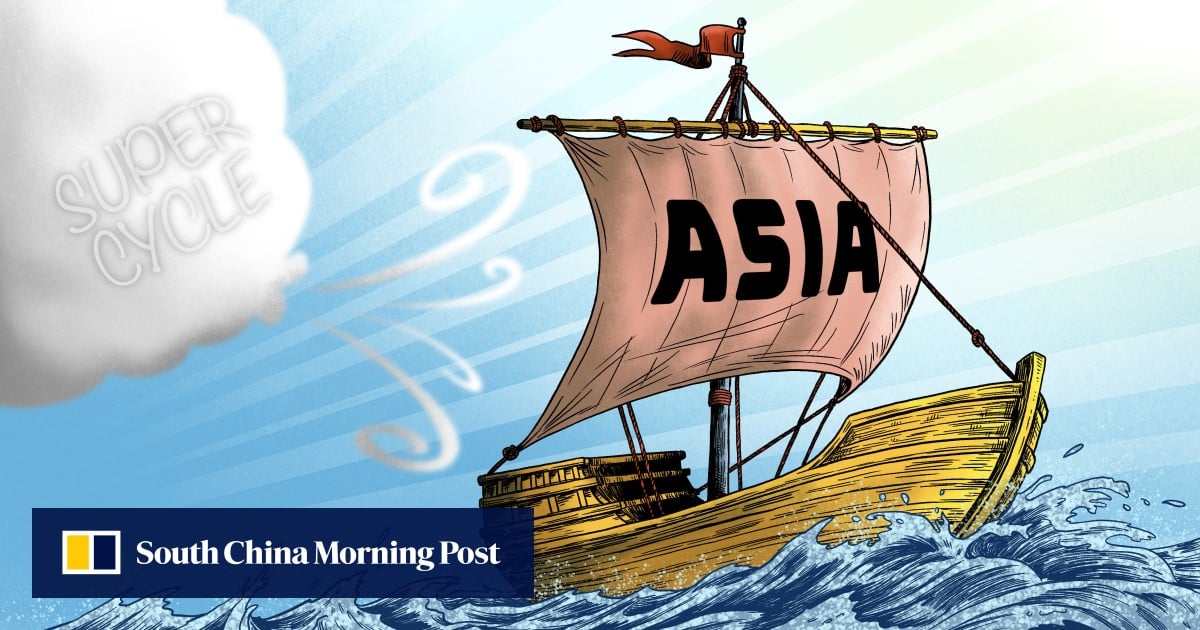
US President Donald Trump made a state visit to Beijing this week. Businesses around East Asia are reacting to fallout from US-involved trade disputes, conflict in the Middle East and a world AI race by raising capital expenditures in relevant industries to the highest levels in 20 years. Morgan Stanley last month declared a coming "super cycle" in capital expenditures around Asia.
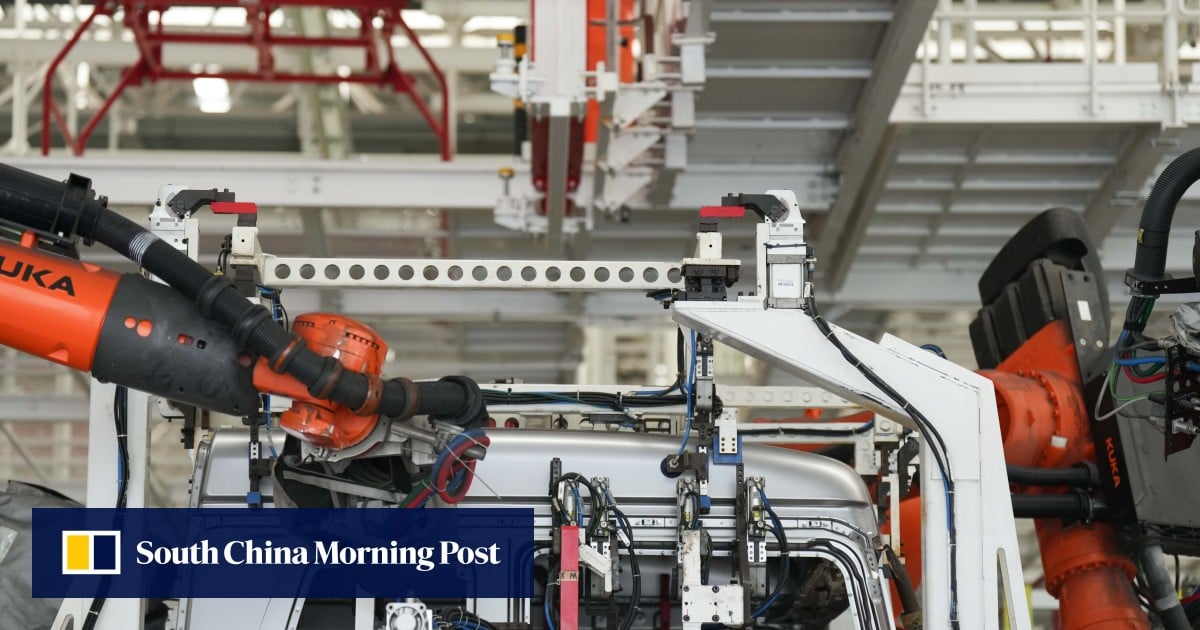
After Donald Trump left Beijing, China's ruling Communist Party called for strengthening the real economy to gain a competitive edge in the global economy. Trump was joined by 17 American business executives on his high-profile trip to Beijing, the wealthiest delegation of its kind to visit the country.

On the Iran issue, Trump wanted to use China's influence, but Beijing avoided clear commitments. On the sensitive issue of Taiwan, Xi applied pressure, but Trump evaded and avoided clear statements. According to U.S. intelligence services, Xi has ordered his "People's Liberation Army" to be ready to take over Taiwan by 2027. René Pfister writes that Xi should think carefully about following Trump and Putin down the path of imperial folly.

Trump and Xi Jinping are meeting on Friday to discuss trade issues. Analysts see only modest breakthrough in ties between world’s two largest economies. Trump and Xi are expected to extend the one-year pause in their trade war agreed to in South Korea in October. They are also expected to sign various business deals.

Xi Jinping tells Nvidia, Tesla and Apple CEOs that China will ‘open wider’ for American tech. Saudi Arabia is considering a Middle Eastern non-aggression pact with Iran. The Bethlehem Project looks at the intersection of US politics and economics through the lens of one city.

The theme of the Trump-Xi summit was "partners, not adversaries" but there were thinly veiled threats about Taiwan and Trump's weakened position at home overshadowed the summit's veneer of cooperation. Chinese purchases of U.S. agricultural products were a key focus of the talks. The leaders agreed that the Hormuz Strait must remain open and demilitarized.

Donald Trump and Xi Jinping agreed to make "a constructive China-U.S. relationship of strategic stability" the new positioning of the relationship, according to the official Xinhua readout of the summit. It is the latest move in a sequence that runs back nearly three decades. Trump tried to define the relationship first; Beijing provided its own rhetorical formula.

This week's summit in Beijing is between China's leader Xi Jinping and U.S. President Donald Trump. Both leaders lead systems with both enormous strengths and vulnerabilities, making easy directional projections for either country complicated. Trump has shown the dangers of rampant self-belief and bluster. China has been less of an unadulterated success under Xi than public imagines.
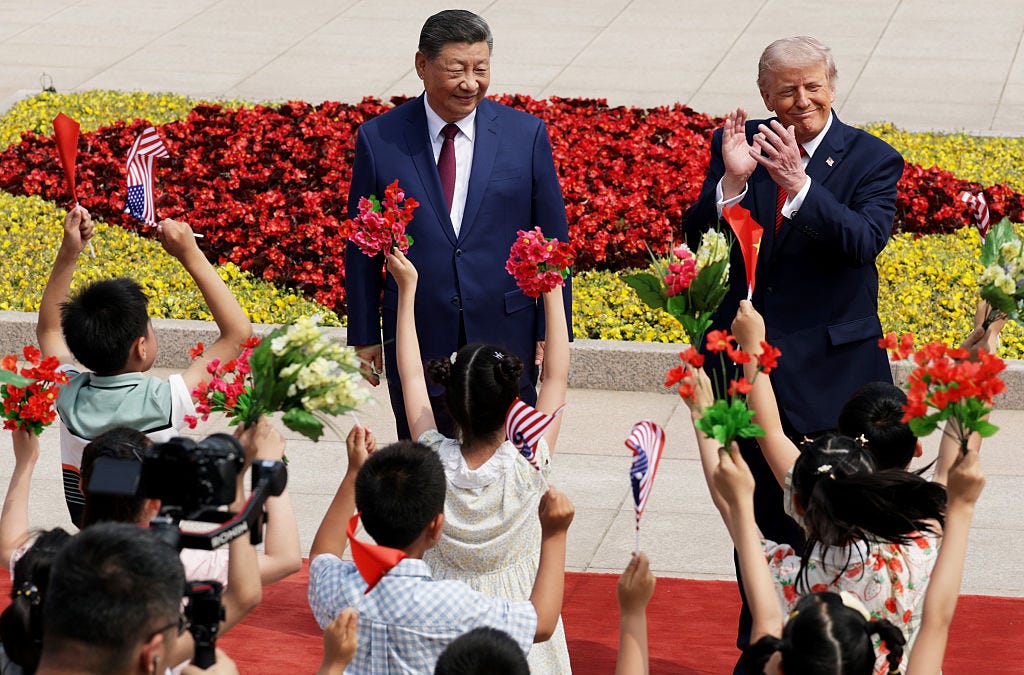
President Trump is in China for the Trump-Xi Summit. Inflation has hit 3.8 percent and Americans are angry about the economy. 65 percent of Americans say the tariffs have made their economic situation worse. Dems lead a generic ballot 45–42.

In recent years, lawyers working with Chinese clients have had to navigate an increasingly complex geopolitical landscape. Tighter data rules, trade barriers and investment restrictions have reshaped cross-border work. China's legal system is also changing. Lawyers are also adapting to a changing environment by rethinking how companies are structured and funded.