
A Missouri state appeals court upheld a $58 million award to a former plant worker who developed bronchiolitis obliterans from exposure to flavoring additive manufacturing company's chemicals. James Graham won $56.6 million punitive damages and $1.5 million in compensatory damages in a jury trial against Givaudan Flavors Corp. The company knew the chemicals it used contained toxic diacetyl and 2,3-pentanedione in the 1980s and did nothing.

The Middle East war has hit the global fertiliser production. The supply of urea, ammonia and sulphur transported through the Persian Gulf has been cut off for nearly a month. The conference in Brazil delivered plans for conserving multiple species that live in the same ecosystems, such as the Amazon. The 15th Conference of the Parties to the UN Convention on Migratory Species ended on 29 March with an agreement to add 40 migratory species, including cheetah, striped hyena and snowy owls, to the convention’s “protected list”

On April 11, Food Tank will host “Celebrating Our Farmers and Spotlighting Food System Visionaries” in Nairobi, Kenya in partnership with Enviu and The Rockefeller Foundation. The event will feature clips from “Food 2050” and the screening of Food Tank’s new documentary short “Irish Farmers: A Love Story” It represents the premiere of both films on the African continent.

This year's spring arrived 3 to 5 weeks earlier than the average between 1991 and 2020 in the central U.S. and 2 to 3 weeks earlier in southern Midwest states. Climate Central analysis found that spring is trending to an earlier arrival from 1981 to 2025 in most of the United States. An earlier spring could have consequences for the agriculture industry, ecology and more.
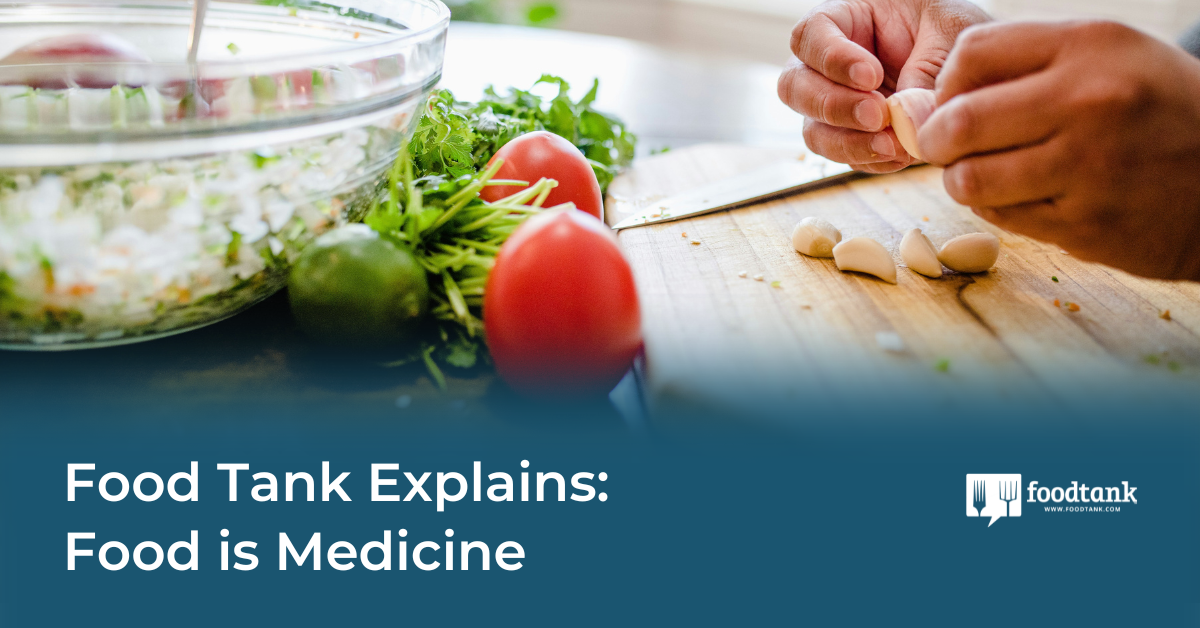
Poor diets are a major cause of cardiovascular disease, diabetes and obesity. Food is Medicine (FIM) programs focus on increasing access, availability, and affordability of healthful foods. FIM interventions span different levels of clinical intensity and support, with programs designed to match patients' medical conditions and social needs.

A new viewpoint study suggests the use of antibacterial soaps and other cleaning products may contribute to the development of antimicrobial resistance (AMR) in humans and the environment. Biocides are added to many common household products, including antibacterial hand soaps, disinfecting wipes, spray cleaners, laundry sanitizers, textiles and personal care products. Bacteria become resistant to these biocides and clinical antibiotics, which increases the risk of severe illness, disability or death. The authors recommend that the World Health Organization implement targets to reduce the use and limit antimicrobial ingredients.

Swiss scientists and chocolatiers have developed a new chocolate recipe in which sugar is replaced with plant-based byproducts. The new method is more efficient and healthier than traditional methods. It also reduces waste and environmental impact and enhances the nutritional value of chocolate. New approach could be a new source of income for farmers.

A new paper in Analytical Methods suggests that the quantity of microplastics may be overestimated due to a simple lab error. The group from the University of Michigan discovered that they were unknowingly contaminating their samples with standard lab gloves, inflating the results. The culprit turned out to be sample contamination from their lab gloves.

A high-protein diet rich in casein and wheat gluten can prevent cholera infection by up to 100-fold. Cholera is a bacterial disease spread through contaminated water and food. The next step is to explore the effect of these proteins in humans.

The Trump administration quietly axed a Biden-era program to help young and first-time farmers gain access to land. It's the latest in a series of Trump administration moves targeting conservation programs and staff at the U.S. Department of Agriculture. The Natural Resources Conservation Service (NRCS) lost 23 percent of its staff, dropping from nearly 12,000 employees to just over 9,000.