
An intelligence analyst at China's Ministry of State Security is given an assignment to assess the relative strengths of the U.S. and China after the last week's summit between Presidents Donald Trump and Xi Jinping. He is skeptical about the pro-Beijing narrative about China’s emerging dominance.
Andrew and Bill discuss the US-China summit in Beijing. Trump's comments on Taiwan spark concern and questions. They also discuss Rubio, Ratner, an indictment of Chinese shipping magnates, and an Iran ceasefire Xi calls "imperative". At the end they discuss Vladimir Putin's visit to Beijing and questions for the EU.
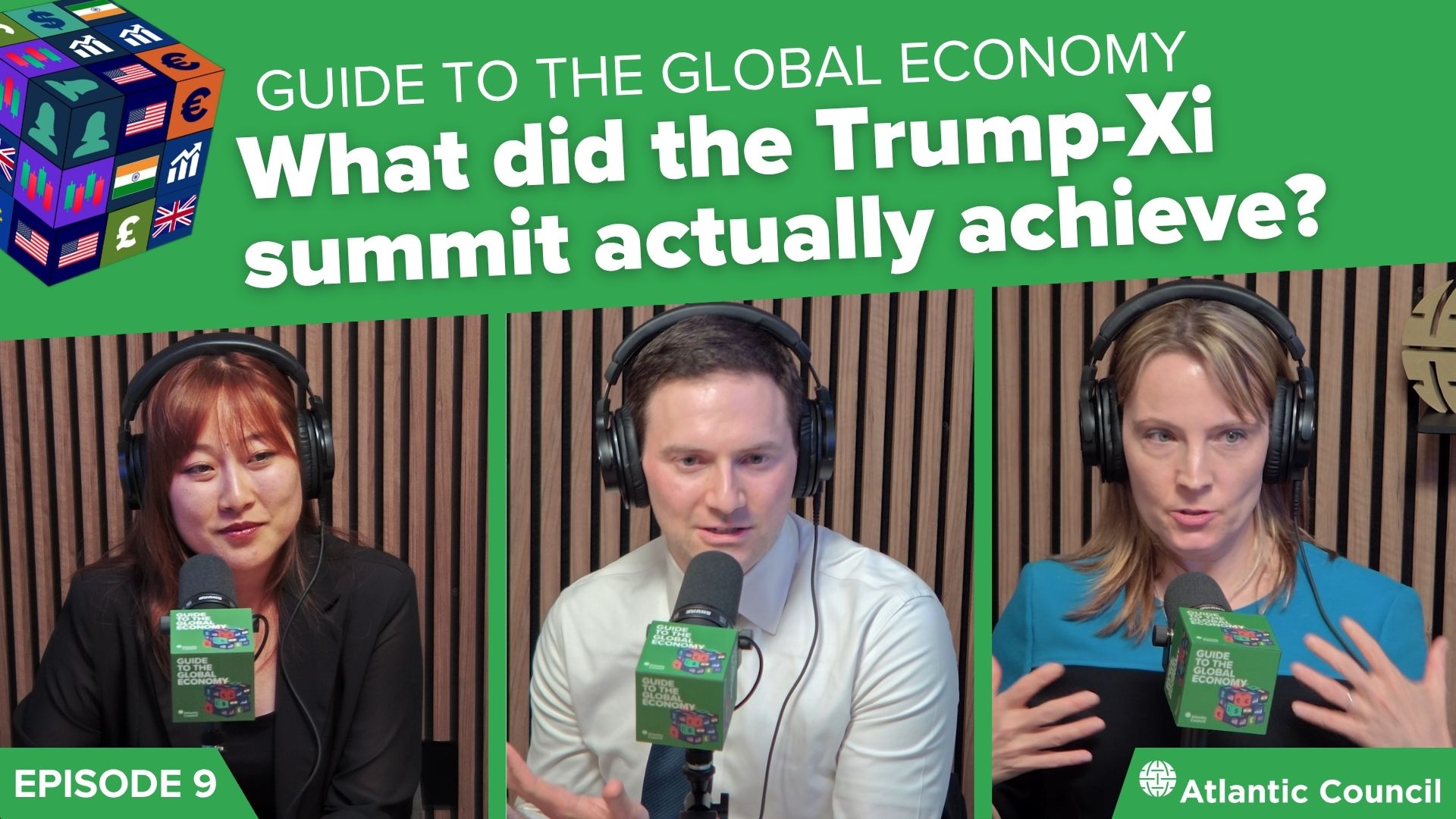
Guide to the Global Economy is your go-to podcast for navigating the increasingly busy intersection of global economics, finance, national security, and geopolitics. Josh Lipsky, Jessie Yin, and Melanie Hart discuss the Trump-Xi summit and discuss what actually came out of it.

European companies' confidence in the Chinese market is showing signs of rebounding for the first time since 2022. Beijing is perceived as a "champion" of stability amid rising global volatility. Less than half of respondents said China’s business environment had become more politicised, down from 52% a year earlier.

Chad Bown talked about trade relations with China at a Peterson Institute event launching the "How To Win a Trade War" book. Bown believes that China has a different economic system and a different way of interacting with the international trading system than the rest of the world. China's policies and outcomes made it clear that it didn't believe in interdependence the same way as other members of the WTO and other economies. U.S. foreign policy was distracted by the 9/11 response for many years. Pressuring China on anything was not high on the agenda, and getting China's support (or non-objection) for War on Terror things was more of the focus

According to IMF estimates, China’s share of global GDP peaked at roughly 18.5 percent in 2021 and is expected to fall to around 16.5% by the end of 2025. China's economic slowdown reflects the exhaustion of the “catch-up growth” model that powered China's rise over the past four decades. The country's demographic challenges may prove even more severe than those faced by Japan.
There has been a rivalry between New Delhi and Beijing for the past eight decades. China's rise was an economic challenge and slap in the face for India's stumbling growth model. Trump's trade policies have been harmful to US interests. Trump has taken a unilateral wrecking ball to the architecture of multilateral trade. China has emerged as a more trustworthy partner in trade and multilateral stability.

Xi Jinping and Donald Trump met in Beijing on May 13. Commentaries in Chinese-language media have hailed the meeting as a turning point in the current phase of bilateral relations between China and the U.S. Some authors are optimistic, while others are sceptical.
Xi’an Jiaotong University in China will hold a conference on In Search of Common Ground: China-EU Economic Relations in Times of Global Disorder on 29-30 May 2026. Since 2019, the European Union defines China as a ‘multifaceted partner, economic competitor, and systemic rival’ In 2025, it reaffirmed this assessment of its relationship with China, putting more emphasis on the rivalry. The US is intent on redesigning the international order in its own narrow national interest and has turned its back on international cooperation and the rule of law in international relations.

Premier Li presided over this week's State Council Executive Meeting. The agenda of the meeting was to study work related to advancing the building of a unified national market, review and adopt the “15th Five-Year Plan” for Building a Modernized Emergency-Management System and discuss the People’s Bank of China Law of the People's Republic of China (Revised Draft).