
The latest UNESCO survey on A.I. gathers views and advice on the evolving relationship between culture and artificial intelligence. The report was part of the preparatory work for MONDIACULT 2025, held in Barcelona, which brought together member states to consider future global cultural policies.
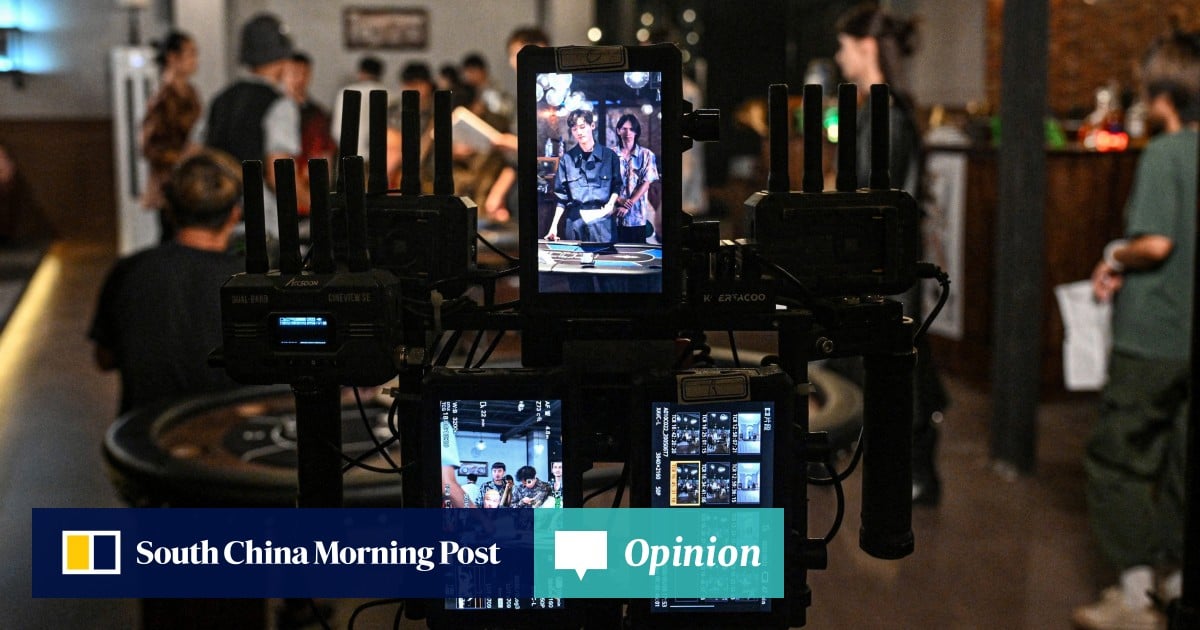
Last week, Chinese regulators announced policies encouraging cinemas to reinvent themselves with AI-powered experiences. Chinese market for AI short dramas and AI animation grew explosively in the first three months of this year, driven by AI tools that resulted in nearly 130 billion views on short-video platform Douyin.

DATALAND is the world's first A.I. museum, recently opened in L.A. by Refik Anadol. It's located on Grand Avenue across the street from the late architect’s Walt Disney Concert Hall and covers about 35,000 square feet. Visitors descend an escalator to a massive space with 720 million pixels swimming with imagery inspired by the Yawanawá rainforest of the Amazon.

Azerbaijan's national pavilion exhibition at Venice Biennale is called "The Attention". Faig Ahmed's works transform the traditional Azerbaijani carpet into a coded surface bridging craft, metaphysics and computational logic. The exhibition highlights the parallels between the discoveries of modern science and the way the creative process translates the inner world and the mysteries of the cosmos.

There is a sudden rush to advertise the claim that books are being widely banned in America. PEN America claims that during the previous school year, no fewer than 6,870 book bans were imposed across the nation. The Heritage Foundation set out in 2023 to test the claim and found that 74 percent of the books PEN and others alleged were being targeted by big, bad banning campaigns were not.

EU wants to withdraw €2 million from the Venice Biennale. UNESCO is reviewing a redevelopment behind the façade of Florence’s former Teatro Comunale. A Nazi-looted art hunt is underway in France. Australia's Museum of Old and New Art is going global with plans for a new Bangkok outpost.

Artificial intelligence is playing a significant role in setting the price of artworks. The art market is opaque, as the only information on what something costs comes from auction sales records. Some companies have developed programs using A.I. technology to help with just that. Others are still in development.

The International Council of Museums (ICOM) adopted a new Code of Ethics to guide the activities of museums globally. The vote passed by a margin of 85.9% in favor at the 41st Ordinary General Assembly in Paris. The new code condenses the eight principles of the 2004 code into five: professionalism, professionalism, education, collections, and governance.

There are a growing number of visual arts programs at independent art colleges and universities offering courses focused on advanced technology. They teach students how to use A.I. tools as part of a larger creative process. Some of the tools used in the courses focus on ethics and developing good copyright practices.
The latest UNESCO survey on A.I. gathers views and advice on the evolving relationship between culture and artificial intelligence. The report was part of the preparatory work for MONDIACULT 2025, held in Barcelona, which brought together member states to consider future global cultural policies.
Last week, Chinese regulators announced policies encouraging cinemas to reinvent themselves with AI-powered experiences. Chinese market for AI short dramas and AI animation grew explosively in the first three months of this year, driven by AI tools that resulted in nearly 130 billion views on short-video platform Douyin.
DATALAND is the world's first A.I. museum, recently opened in L.A. by Refik Anadol. It's located on Grand Avenue across the street from the late architect’s Walt Disney Concert Hall and covers about 35,000 square feet. Visitors descend an escalator to a massive space with 720 million pixels swimming with imagery inspired by the Yawanawá rainforest of the Amazon.
Azerbaijan's national pavilion exhibition at Venice Biennale is called "The Attention". Faig Ahmed's works transform the traditional Azerbaijani carpet into a coded surface bridging craft, metaphysics and computational logic. The exhibition highlights the parallels between the discoveries of modern science and the way the creative process translates the inner world and the mysteries of the cosmos.
There is a sudden rush to advertise the claim that books are being widely banned in America. PEN America claims that during the previous school year, no fewer than 6,870 book bans were imposed across the nation. The Heritage Foundation set out in 2023 to test the claim and found that 74 percent of the books PEN and others alleged were being targeted by big, bad banning campaigns were not.
EU wants to withdraw €2 million from the Venice Biennale. UNESCO is reviewing a redevelopment behind the façade of Florence’s former Teatro Comunale. A Nazi-looted art hunt is underway in France. Australia's Museum of Old and New Art is going global with plans for a new Bangkok outpost.
Artificial intelligence is playing a significant role in setting the price of artworks. The art market is opaque, as the only information on what something costs comes from auction sales records. Some companies have developed programs using A.I. technology to help with just that. Others are still in development.
The International Council of Museums (ICOM) adopted a new Code of Ethics to guide the activities of museums globally. The vote passed by a margin of 85.9% in favor at the 41st Ordinary General Assembly in Paris. The new code condenses the eight principles of the 2004 code into five: professionalism, professionalism, education, collections, and governance.
There are a growing number of visual arts programs at independent art colleges and universities offering courses focused on advanced technology. They teach students how to use A.I. tools as part of a larger creative process. Some of the tools used in the courses focus on ethics and developing good copyright practices.