
This week's episode of The David Frum Show features David's reaction to the recent ICE shooting in Maine. Maya MacGuineas is president of the Committee for a Responsible Federal Budget. They discuss the future of Social Security, the mounting national debt, and the political dysfunction preventing Washington from confronting America's fiscal challenges. They also discuss Hilary Mantel's novel A Place of Greater Safety and the lessons one can learn from the terror of the French Revolution.

The government sent payments for almost 60 million children on Thursday, totaling $15 billion. Five years ago, on July 15, 2011, the expanded child tax credit went into effect for one year. The One Big Beautiful Bill Act (OBBBA), passed without a single Democratic vote and signed into law last July, extended or expanded more than $4.5 trillion in tax breaks for the wealthy and corporations while cutting more than $1 trillion from social welfare programs. The OBBBA cut $187 billion in federal funding from the Supplemental Nutrition Assistance Program (SNAP).

Inflation has weakened the incentive structure that once made showing up to work feel like a path to something bigger. Katie Warnock runs a staffing firm that places hourly, in-person professionals. Many jobs she recruits for cannot be performed remotely, which means reliability is fundamental to the job itself. Work ethic has always been shaped by incentives. Financial pressures remain one of the biggest concerns shaping employees' outlook on work.

Trump Accounts were officially launched on July 4. The administration is trying to boost sign-ups among U.S. parents. The program's architects have suggested auto-enrollment for every American child. The government-wide drive may suffer because of the staffing and funding cuts enacted by the Department of Government Efficiency (DOGE).
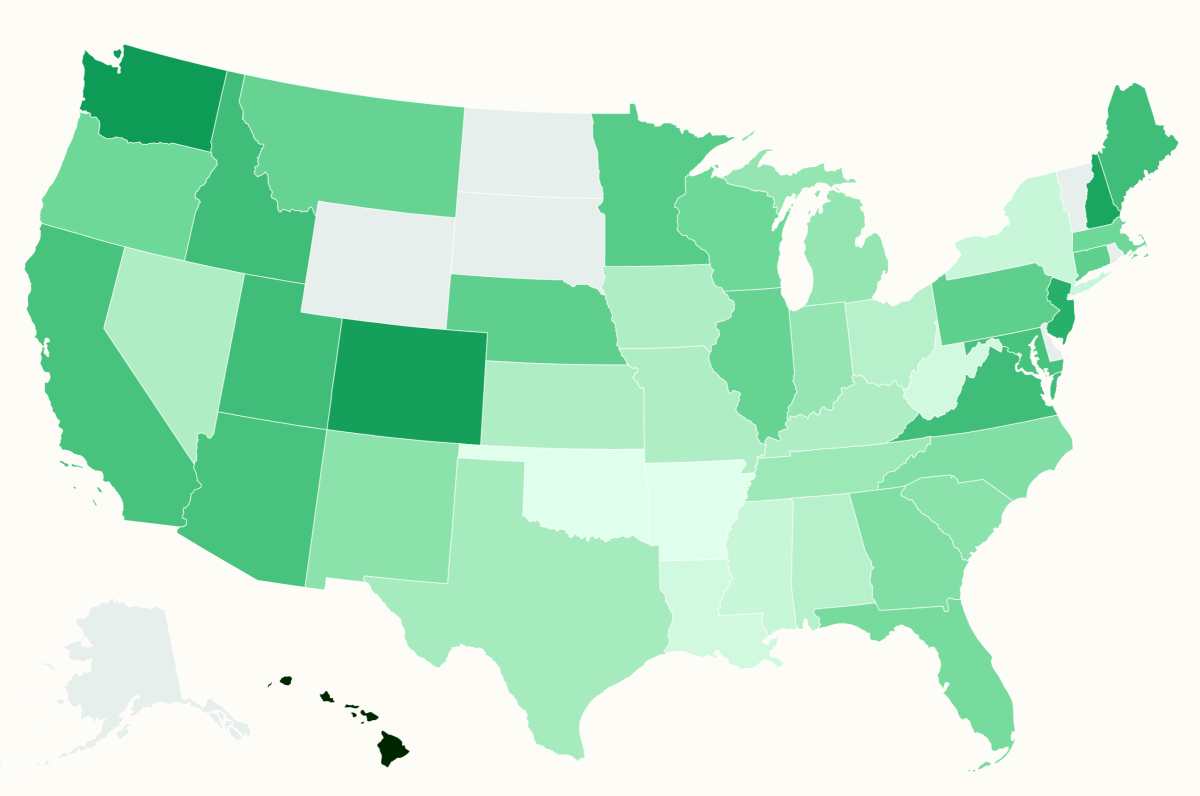
The median fortune in the U.S. stood at $204,900 in 2024, according to the Census Bureau data. Hawaii has the highest median net worth at $643,300, while Oklahoma is the poorest state at $61,080. White and Asian Americans are more likely to have a net worth exceeding $1 million, compared to Black and Hispanic households.

Gen Z is experiencing higher levels of inflation than other generations, according to Numerator's June 2026 Consumer Goods Price Index. Prices for everyday household goods for Gen Z have increased by 39.4 percent since January 2018, while other generations face the national average increase of 33.8 percent. Quick-service restaurant inflation has been a key driver of Gen Z's higher inflation. Gen Z and low-income consumers spend more money on quick-service restaurants. They are more likely to eat out at least once a week.

Health insurance companies expect the cost of medical services and prescription drugs to soar by 9% in 2027. Many employers require workers to pay part of that cost. The escalating costs of employers’ premiums are reducing workers’ wages and take-home pay, while raising the prices of goods and services in California and across the country.

President Trump has made birthright citizenship reform a national priority. Texas is investigating a hospital accused of marketing "birth packages" to foreign nationals. Congress has a responsibility to clarify our nation's citizenship laws. The Birthright Citizenship Act would clarify the meaning of the 14th Amendment. It would clarify that automatic citizenship applies only when at least one parent is a United States citizen or national, a lawful permanent resident, or a lawful immigrant serving on active duty in the United States Armed Forces.

The top 10 counties with the largest net losses of taxpayers to other states were all located in California and New York. Los Angeles County, home to Hollywood, led the nation with a net loss of 17,496 tax filers. The next-largest taxpayer losses were recorded in Queens County, New York (-17,109), the Bronx (-16,319), Orange County, California (-11,618), and Suffolk County (-10,434). Manhattan gained more interstate tax filer than any other county in the nation while losing nearly $1 billion in adjusted gross income.
This week's episode of The David Frum Show features David's reaction to the recent ICE shooting in Maine. Maya MacGuineas is president of the Committee for a Responsible Federal Budget. They discuss the future of Social Security, the mounting national debt, and the political dysfunction preventing Washington from confronting America's fiscal challenges. They also discuss Hilary Mantel's novel A Place of Greater Safety and the lessons one can learn from the terror of the French Revolution.
The government sent payments for almost 60 million children on Thursday, totaling $15 billion. Five years ago, on July 15, 2011, the expanded child tax credit went into effect for one year. The One Big Beautiful Bill Act (OBBBA), passed without a single Democratic vote and signed into law last July, extended or expanded more than $4.5 trillion in tax breaks for the wealthy and corporations while cutting more than $1 trillion from social welfare programs. The OBBBA cut $187 billion in federal funding from the Supplemental Nutrition Assistance Program (SNAP).
Inflation has weakened the incentive structure that once made showing up to work feel like a path to something bigger. Katie Warnock runs a staffing firm that places hourly, in-person professionals. Many jobs she recruits for cannot be performed remotely, which means reliability is fundamental to the job itself. Work ethic has always been shaped by incentives. Financial pressures remain one of the biggest concerns shaping employees' outlook on work.
Trump Accounts were officially launched on July 4. The administration is trying to boost sign-ups among U.S. parents. The program's architects have suggested auto-enrollment for every American child. The government-wide drive may suffer because of the staffing and funding cuts enacted by the Department of Government Efficiency (DOGE).
The median fortune in the U.S. stood at $204,900 in 2024, according to the Census Bureau data. Hawaii has the highest median net worth at $643,300, while Oklahoma is the poorest state at $61,080. White and Asian Americans are more likely to have a net worth exceeding $1 million, compared to Black and Hispanic households.
Gen Z is experiencing higher levels of inflation than other generations, according to Numerator's June 2026 Consumer Goods Price Index. Prices for everyday household goods for Gen Z have increased by 39.4 percent since January 2018, while other generations face the national average increase of 33.8 percent. Quick-service restaurant inflation has been a key driver of Gen Z's higher inflation. Gen Z and low-income consumers spend more money on quick-service restaurants. They are more likely to eat out at least once a week.
Health insurance companies expect the cost of medical services and prescription drugs to soar by 9% in 2027. Many employers require workers to pay part of that cost. The escalating costs of employers’ premiums are reducing workers’ wages and take-home pay, while raising the prices of goods and services in California and across the country.
President Trump has made birthright citizenship reform a national priority. Texas is investigating a hospital accused of marketing "birth packages" to foreign nationals. Congress has a responsibility to clarify our nation's citizenship laws. The Birthright Citizenship Act would clarify the meaning of the 14th Amendment. It would clarify that automatic citizenship applies only when at least one parent is a United States citizen or national, a lawful permanent resident, or a lawful immigrant serving on active duty in the United States Armed Forces.
The top 10 counties with the largest net losses of taxpayers to other states were all located in California and New York. Los Angeles County, home to Hollywood, led the nation with a net loss of 17,496 tax filers. The next-largest taxpayer losses were recorded in Queens County, New York (-17,109), the Bronx (-16,319), Orange County, California (-11,618), and Suffolk County (-10,434). Manhattan gained more interstate tax filer than any other county in the nation while losing nearly $1 billion in adjusted gross income.