
Sir Keir Starmer resigned as British Prime Minister last month. China's state-run media suggested that liberal democracies are unstable. People's Daily asked Cui Hongjian, a Chinese diplomat-turned-professor, if there is a problem with this type of government.

Donald Trump's administration is trying to subvert democracy by changing electoral rules in favor of the ruling party. There is a need to build people power and create novel coalitions across civil society to prevent further authoritarian consolidation. Community organizations must not slow down in their efforts to register and educate millions of voters.

The Information State by Jacob Siegel is one of the most important books of the twenty-first century. Siegel's account is an elegant and insightful panorama of the twilight of American liberalism. The information state has replaced the consent of the governed with control of the codes and protocols of the digital public arena. Social media platforms are at the center of a mode of governance that monitors the political expressions of millions.

Bangladesh Nationalist Party (BNP) government completed its first 100 days in office on May 17. Many Bangladeshis expected stability, economic recovery, democratic renewal, and stronger international engagement. Instead, the country appears to be moving through a period of uncertainty, fear, declining confidence, and diplomatic drift. Awami League activities remain banned and a large number of Awami league leaders, activists, and supporters are reportedly in prison or facing cases. Law and order is also a major public concern. The economy offers little comfort, inflation continues to hurt ordinary families, businesses remain cautious, and investor confidence appears weak. Since taking office, the BNP government has, in the view of
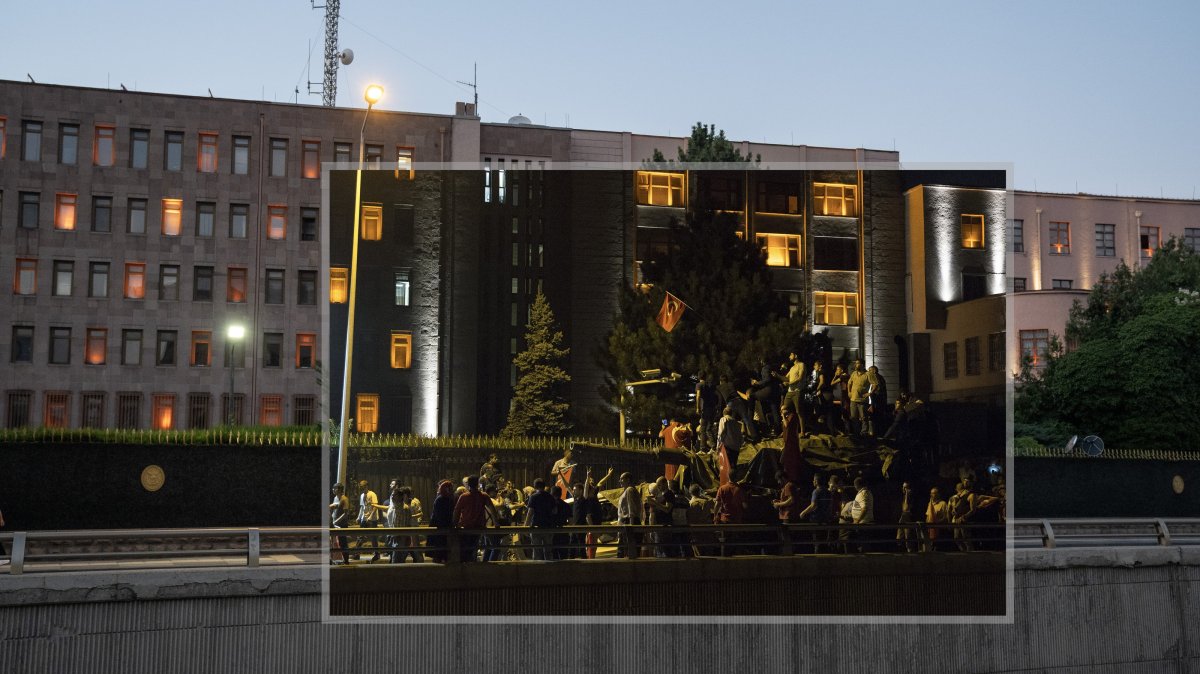
July 15 coup attempt is a turning point in Turkish domestic and foreign policy. The post-coup period saw the restructuring of both state institutions and the country’s domestic politics and foreign policies. Türkiye's dependence on the West largely ended and the search for strategic autonomy accelerated. Western states supported all anti-Türkite terrorist organizations and structures.

Hungary's parliament passed constitutional amendments to oust Viktor Orbán's allies from power. Prime Minister Péter Magyar's ruling Tisza party passed the amendments with a two-thirds majority. Orbán was ousted from power in April. Gergely Gulyás resigned in protest.

Opponents of the Hungarian government's efforts to oust the country's president gathered for a protest in the capital Budapest on Thursday. The new center-right government has vowed to remove President Tamás Sulyok with a constitutional amendment. Viktor Orbán lost the election in April and his party, Fidesz, has struggled to recover from the defeat.
Report documents patterns of mass arbitrary detention, violations of due process, torture and other ill-treatment, enforced disappearances and deaths in state custody. It analyses how the erosion of judicial independence, the militarization of public security and the approval of reforms have facilitated the commission of serious human rights violations.

2026 Freedom and Prosperity Indexes measure levels of political freedom, economic freedom and adherence to the rule of law in one index and levels of wealth and human development in the other. Global environment has become more uncertain and dangerous in many ways. The rule of the law is often the last barrier against political backsliding. Economic freedom has long helped offset political decline in the aggregate Freedom Index.
Sir Keir Starmer resigned as British Prime Minister last month. China's state-run media suggested that liberal democracies are unstable. People's Daily asked Cui Hongjian, a Chinese diplomat-turned-professor, if there is a problem with this type of government.
Donald Trump's administration is trying to subvert democracy by changing electoral rules in favor of the ruling party. There is a need to build people power and create novel coalitions across civil society to prevent further authoritarian consolidation. Community organizations must not slow down in their efforts to register and educate millions of voters.
The Information State by Jacob Siegel is one of the most important books of the twenty-first century. Siegel's account is an elegant and insightful panorama of the twilight of American liberalism. The information state has replaced the consent of the governed with control of the codes and protocols of the digital public arena. Social media platforms are at the center of a mode of governance that monitors the political expressions of millions.
Bangladesh Nationalist Party (BNP) government completed its first 100 days in office on May 17. Many Bangladeshis expected stability, economic recovery, democratic renewal, and stronger international engagement. Instead, the country appears to be moving through a period of uncertainty, fear, declining confidence, and diplomatic drift. Awami League activities remain banned and a large number of Awami league leaders, activists, and supporters are reportedly in prison or facing cases. Law and order is also a major public concern. The economy offers little comfort, inflation continues to hurt ordinary families, businesses remain cautious, and investor confidence appears weak. Since taking office, the BNP government has, in the view of
July 15 coup attempt is a turning point in Turkish domestic and foreign policy. The post-coup period saw the restructuring of both state institutions and the country’s domestic politics and foreign policies. Türkiye's dependence on the West largely ended and the search for strategic autonomy accelerated. Western states supported all anti-Türkite terrorist organizations and structures.
Hungary's parliament passed constitutional amendments to oust Viktor Orbán's allies from power. Prime Minister Péter Magyar's ruling Tisza party passed the amendments with a two-thirds majority. Orbán was ousted from power in April. Gergely Gulyás resigned in protest.
Opponents of the Hungarian government's efforts to oust the country's president gathered for a protest in the capital Budapest on Thursday. The new center-right government has vowed to remove President Tamás Sulyok with a constitutional amendment. Viktor Orbán lost the election in April and his party, Fidesz, has struggled to recover from the defeat.
Report documents patterns of mass arbitrary detention, violations of due process, torture and other ill-treatment, enforced disappearances and deaths in state custody. It analyses how the erosion of judicial independence, the militarization of public security and the approval of reforms have facilitated the commission of serious human rights violations.
2026 Freedom and Prosperity Indexes measure levels of political freedom, economic freedom and adherence to the rule of law in one index and levels of wealth and human development in the other. Global environment has become more uncertain and dangerous in many ways. The rule of the law is often the last barrier against political backsliding. Economic freedom has long helped offset political decline in the aggregate Freedom Index.